
Summer can be demanding on a fragrance. Heat can make the opening feel stronger, change the way certain notes develop and make some perfumes feel much heavier than they do in cooler weather. A fragrance that works beautifully on a cold day may become too sweet, dense or noticeable once the temperature rises.
Finding the right summer fragrance is therefore not simply a matter of choosing something labelled “fresh.” Citrus, aquatic, green and aromatic fragrances are popular in warm weather, but the notes alone do not tell the whole story. The way a perfume is structured, how it develops on warm skin, how strongly it projects and where you intend to wear it all matter.
This guide looks at 20 men’s fragrances that suit summer in different ways.
Why Summer Changes How a Fragrance Behaves
The relationship between heat and fragrance comes down partly to chemistry and partly to the way we perceive smells. Understanding both helps explain why a perfume can smell noticeably different in warm weather.
1. Heat pushes fragrance out faster
A perfume contains molecules that evaporate at different rates. Perfumers traditionally describe their development in terms of top, heart and base notes. A review in the Journal of Cosmetic Science describes top notes as the most volatile, lasting around 15 minutes, while body notes can last from roughly 15 minutes to four hours and base notes from four to eight hours.
Skin physiology also affects how long a fragrance remains noticeable. The same review found that the way people perceive fragrance can vary, so these time periods should not be treated as exact rules.
In practical terms, warm weather can make a fragrance feel more noticeable when first sprayed, while the scent may seem to disappear sooner afterwards. That is one reason summer fragrances often feel brighter and more immediate.
2. Your nose can stop noticing a fragrance before it disappears
One of the easiest mistakes to make in summer is adding more perfume simply because you can no longer smell it.
This is known as olfactory adaptation. Continued exposure to an odour can reduce how intense and noticeable it seems to you. Research published in Attention, Perception, & Psychophysics found that the perceived intensity of a pleasant fragrance decreased during a 10-minute exposure, with attention also affecting how quickly the scent seemed to fade.
There is some nuance to science. Research on the human olfactory epithelium did not find a clear reduction in the electrical response of the nose during repeated exposure, even though people’s ratings of intensity fell for some odours. This suggests that at least part of what we experience as a fragrance “disappearing” happens in how the brain processes the smell rather than the fragrance simply vanishing from the skin.
The practical lesson is simple: if you stop noticing your perfume after wearing it for a while, resist the urge to keep spraying. Someone standing next to you may still smell it clearly.
3. Sweat does not smell on its own
Fresh sweat is largely odourless. The smell associated with perspiration develops when substances released by the body interact with bacteria living on the skin.
A review published in Chimia explains that some of the compounds responsible for underarm odour are released through bacterial activity, including compounds produced by Corynebacteria.
Perfume can help cover unwanted body odour, but it does not remove the source. In hot weather, applying a beautiful fragrance over stale sweat is rarely going to produce the result you want.
A shower, deodorant and clean skin should come first. Fragrance comes afterwards.
4. Citrus and sun deserve some respect
Citrus oils are closely associated with summer fragrances, but some citrus materials contain furocoumarins such as bergapten, which can cause phototoxic reactions when applied to skin that is exposed to ultraviolet light.
The IFRA standard places limits on bergapten in leave-on products intended for UV-exposed skin. Commercial fragrances are formulated within established safety limits, so there is no reason to avoid citrus fragrances simply because you plan to spend time outside.
The concern is more relevant to applying raw citrus oils or homemade mixtures directly to sun-exposed skin. A properly formulated fragrance is a different matter.
Also Check Out Our Previous Article on Some of the 11 Sexiest Colognes We Curated for Men That Women Love
What Makes a Fragrance Good for Summer
A summer fragrance does not need to smell like lemon, seawater or freshly cut grass. What matters more is how comfortable the fragrance remains as the temperature rises and whether its character suits the setting.
Citrus, aquatic, aromatic and green notes are common in warm-weather perfumes because they tend to create a sense of brightness and freshness.
- Citrus notes such as lemon, bergamot, grapefruit and mandarin provide a bright opening and the immediate freshness many people associate with summer.
- Aquatic and marine notes create a different impression. They can suggest water, salt, sea air or an ocean-like atmosphere.
- Aromatic notes such as lavender, rosemary, sage and mint bring a clean, herbal quality without making the fragrance feel excessively heavy.
- Green notes can suggest leaves, grass, stems and fresh vegetation, giving a fragrance freshness without relying on citrus or marine accords.
- Woody fragrances can work very well in summer too, particularly when woods are combined with citrus, herbs or mineral notes.
The fragrances that can become difficult in intense heat are often those built around thick vanilla, caramel, dense amber, heavy leather or very sweet fruit. Heat can make sweet and heavy materials feel even more pronounced.
That does not mean you have to put those fragrances away until autumn. Timing matters. A rich fragrance that feels excessive at two in the afternoon may work beautifully at nine in the evening when the temperature has fallen. Likewise, a fragrance that works well outside may feel much stronger in a small, enclosed room.
Longevity needs similar consideration. A fragrance that lasts all day is not automatically a better summer fragrance. In high temperatures, excessive projection can become uncomfortable for both the wearer and the people nearby.
A good summer fragrance generally benefits from four qualities:
- Bright top notes such as citrus, herbs and green materials that provide an immediate lift.
- A transparent structure, often using aquatic accords, fresh woods or light musks to add depth without excessive weight.
- A manageable concentration. Eau de toilette and cologne styles often feel lighter on warm skin. Higher concentrations can still work, but they require more restraint when spraying.
- Comfortable projection. Summer often means crowded spaces, offices, cars, trains and restaurants. A fragrance that stays pleasant at close range is usually more useful than one that fills an entire room.
You May Also Want to Check Out Some of The Best Long Lasting Perfumes for Men
The 20 Best Summer Fragrances for Men

Aquatic and Marine Fragrances
1. Giorgio Armani Acqua di Giò
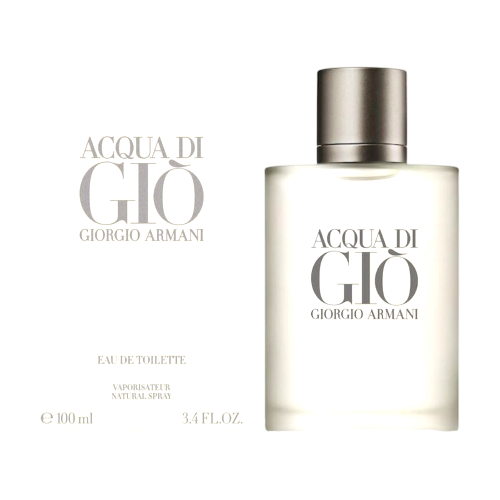
- Launch year: 1996
- Perfumer: Alberto Morillas, Annick Menardo and Christian Dussoulier
- Style: Citrus, aromatic, marine, woody
- Best for: Hot days, holidays, everyday summer wear
Acqua di Giò by Giorgio Armani is one of the fragrances launched as far back in the 90s that’s helping to define the modern aquatic style for men. Its inspiration is closely associated with the island of Pantelleria, off Sicily, where Giorgio Armani has spent time. The fragrance captures the combination of sunlight, sea air and Mediterranean landscapes rather than simply trying to smell “fresh.”
The composition brings together lime, lemon, bergamot, orange and mandarin with marine notes and rosemary. It then settles into a woody, musky base. The citrus gives the opening its brightness, while the marine heart creates the watery character that became so influential in men’s perfumery. Rosemary adds a green, aromatic edge and keeps the composition from becoming a straightforward ocean accord.
It works particularly well in summer because each part of the composition serves a purpose. Citrus gives it lift, marine notes create the sense of water and the woods and musk provide a proper dry-down. The original fragrance is also important historically because it helped establish a more sophisticated interpretation of freshness in men’s fragrance during the 1990s.
Two sprays are enough for most situations.
2. Davidoff Cool Water
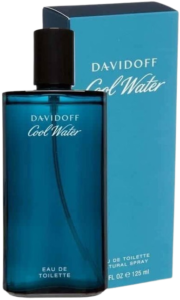
- Launch year: 1988
- Perfumer: Pierre Bourdon
- Style: Aromatic, aquatic
- Best for: Casual weekends, after the gym, nostalgia
Cool Water arrived in 1988, when men’s fragrances were often associated with much heavier styles. Pierre Bourdon created a composition centred around mint, lavender, green notes and a marine freshness, helping establish the aquatic direction that became so prominent in men’s perfumery.
The opening is cool and aromatic, with mint and lavender leading into green notes. Sandalwood, oakmoss and musk give the base a soft, slightly soapy character.
There is something unmistakably nostalgic about Cool Water. The combination of mint, lavender and marine freshness can remind you of a traditional barbershop with the windows open to the sea. Some people may find the dry-down dated compared with modern fragrances, but that is also part of its appeal.
If you enjoy classic aquatic fragrances and want something uncomplicated for casual summer wear, Cool Water remains easy to understand.
3. Issey Miyake L’Eau d’Issey Pour Homme
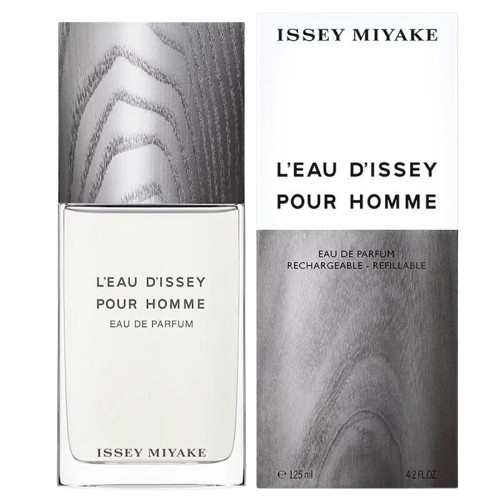
- Launch year: 1994
- Perfumer: Jacques Cavallier Belletrud
- Style: Aquatic, citrus, woody, aromatic
- Best for: Hot days, office, everyday wear
L’Eau d’Issey Pour Homme launched in 1994, with a bottle designed by Issey Miyake and Fabien Baron. The house connected the fragrance to the purity and power of spring water, which fits the broader design philosophy associated with Miyake.
Yuzu and other citrus notes provide the opening, followed by a heart with a subtle nutmeg effect. Cedar, vetiver and musk form the base.
The presence of nutmeg is important because it keeps the fragrance from smelling like straight citrus or water. There is some warmth underneath the freshness, while cedar and vetiver give it structure.
It was distinctive when it appeared and came before the wave of modern “blue” fragrances that now dominate the men’s market. Its moderate projection also makes sense for warm weather, particularly in offices and other close environments.
It smells clean and polished without demanding attention.
4. Bvlgari Aqva Pour Homme
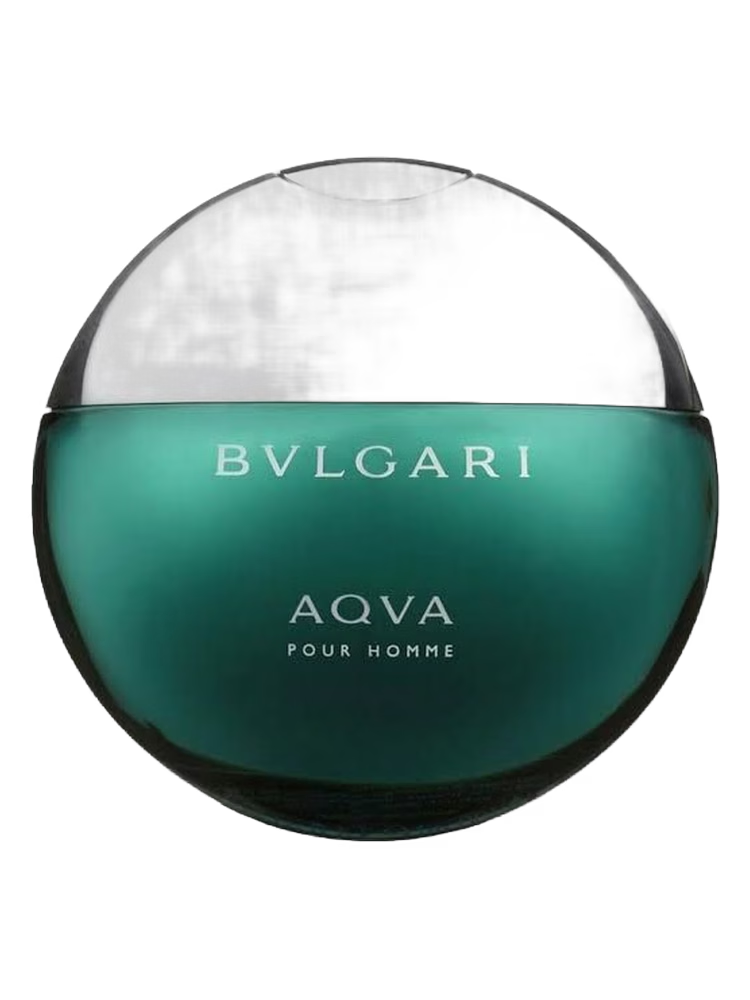
- Launch year: 2005
- Perfumer: Jacques Cavallier Belletrud
- Style: Marine, citrus, aromatic, woody
- Best for: Beach, holidays, hot days
Bvlgari began in Rome in 1884 as a jewellery business founded by the Greek-born Sotirio Voulgaris. Aqva Pour Homme takes the house’s luxury background in a distinctly marine direction.
The fragrance combines mandarin, orange and petitgrain with seaweed, lavender and cotton flower. Cedar, patchouli, clary sage and amber appear in the base.
One of its most distinctive elements is Posidonia oceanica, a Mediterranean seagrass associated with the marine heart. That gives Aqva Pour Homme a more specific relationship with the sea than a generic aquatic accord.
It is clearly suited to beaches, pools and holidays. Compared with H24, it is much more aquatic. Compared with Dior Homme Cologne, it has considerably more substance, making it a useful option when you want marine freshness without an extremely lightweight composition.
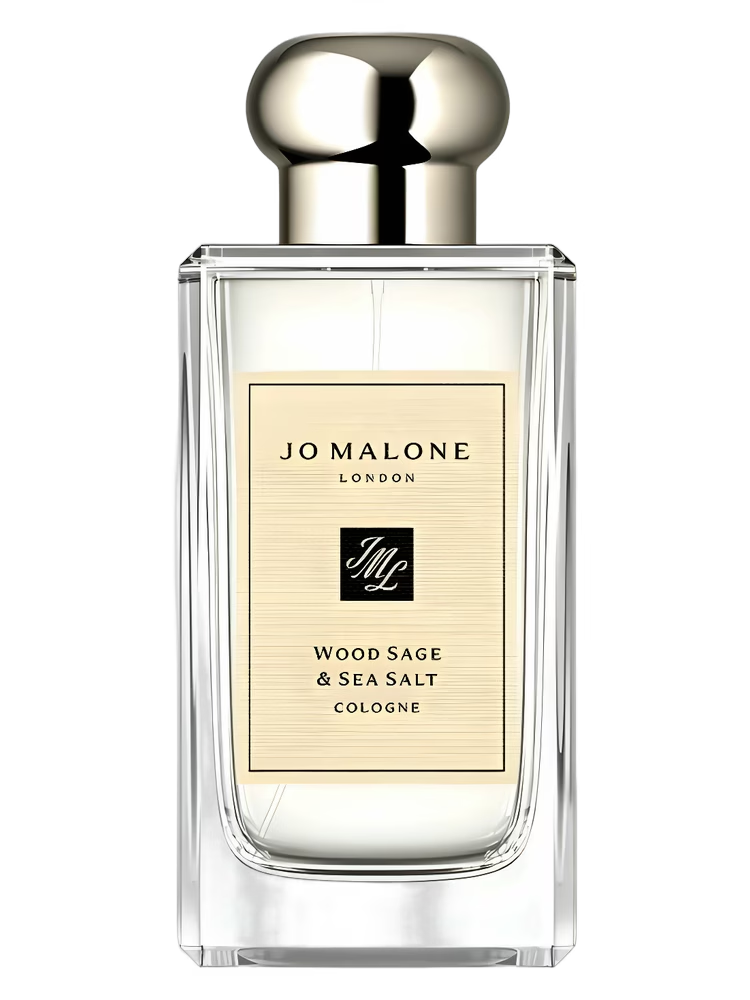
5. Jo Malone London Wood Sage & Sea Salt
- Launch year: 2014
- Perfumer: Christine Nagel
- Style: Marine, woody, mineral
- Best for: Beach walks, weekend markets, relaxed days
Wood Sage & Sea Salt takes a different approach to the idea of a summer fragrance. Rather than tropical fruit or an obvious aquatic accord, Jo Malone London built the scent around a windswept coastline, salty air, wild sage and wet rock.
Christine Nagel created the fragrance using sea salt, sage, ambrette and grapefruit. The result is salty, mineral and gently herbal, with a soft musky quality underneath.
It is one of the more transparent fragrances in this guide, which helps explain why it feels particularly comfortable in warm weather. It also stays relatively close to the skin rather than producing the kind of projection associated with stronger men’s fragrances.
For someone who wants a quiet coastal scent rather than a loud marine perfume, this is an interesting direction.
Citrus and Classic Colognes
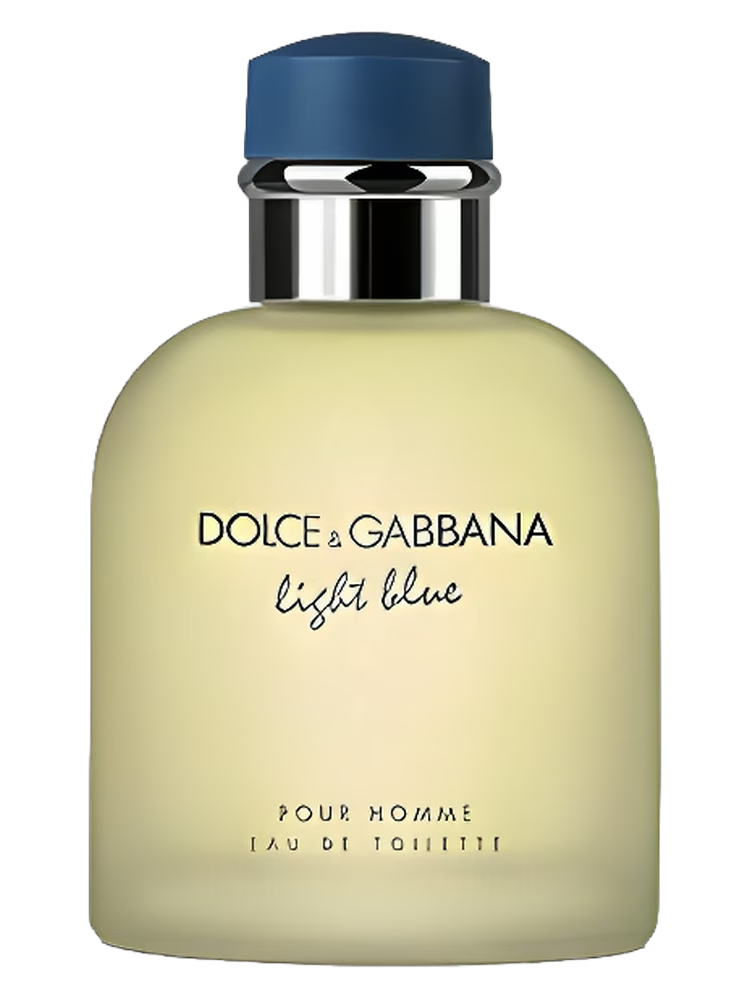
6. Dolce&Gabbana Light Blue Pour Homme
- Launch year: 2007
- Perfumer: Alberto Morillas
- Style: Citrus, aromatic, woody
- Best for: Beach holidays, daytime, casual summer wear
Light Blue Pour Homme is closely associated with the idea of Mediterranean summer. Dolce&Gabbana launched the men’s fragrance in 2007, six years after the original women’s Light Blue created by Olivier Cresp. Alberto Morillas created the men’s version.
Grapefruit, bergamot, Sicilian mandarin and juniper form the opening. Pepper, rosemary and Brazilian rosewood follow, with musk, incense and oakmoss in the base.
The fragrance is more layered than its summer advertising might suggest. Grapefruit gives it a bitter, bright edge, while mandarin adds a softer citrus quality. Juniper and rosemary bring an aromatic character that prevents the composition from becoming simply sweet citrus.
That combination is part of why it works so easily during summer. It can handle a beach holiday, a sunny afternoon or an ordinary warm day without demanding much thought from the wearer.
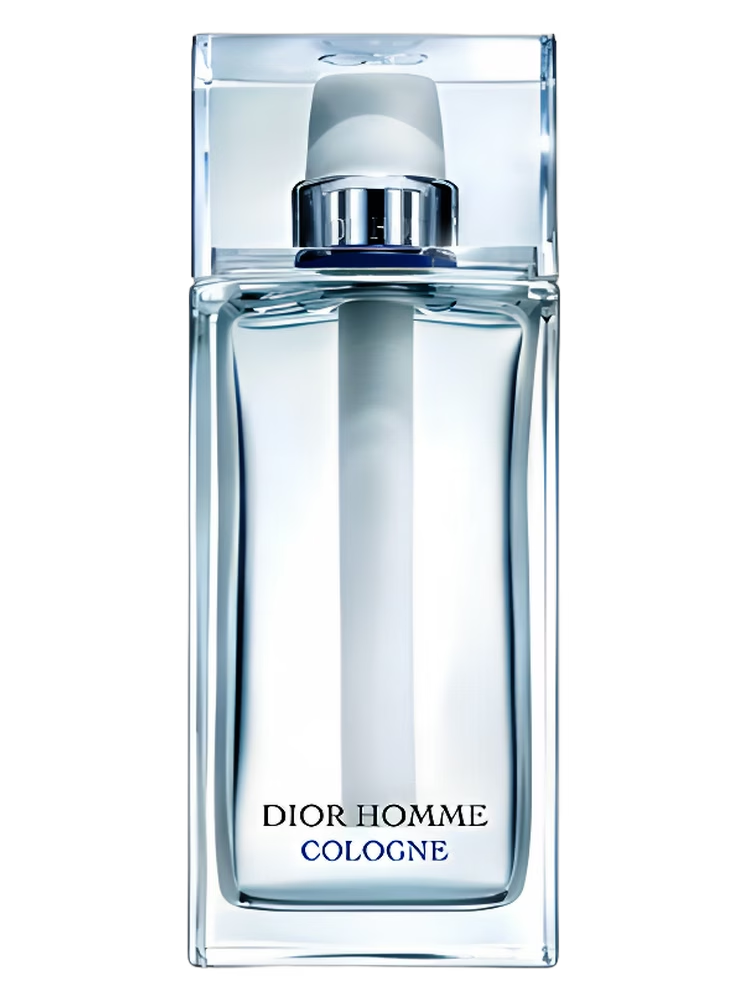
7. Dior Homme Cologne
- Launch year: 2013
- Perfumer: François Demachy
- Style: Citrus, white floral, musk
- Best for: Extreme heat, office, flights
Dior Homme is widely associated with iris and its more powdery character, but Dior Homme Cologne takes the line in a much lighter direction.
The 2013 version created by François Demachy is centred around Calabrian bergamot, grapefruit blossom and musk. Earlier fragrances called Dior Homme Cologne existed, but the 2013 release is a separate interpretation rather than the original formula simply returning unchanged.
Its appeal lies in its simplicity. There is bright citrus, clean skin and a soft musky finish. It does not try to build a complicated progression or create the depth of a woody or amber fragrance.
That simplicity becomes useful in extreme heat. When temperatures are high, a complicated fragrance can sometimes feel like too much. Dior Homme Cologne is much less intrusive and therefore works well in offices, aircraft cabins and other enclosed spaces.
Longevity is modest, so reapplication may be necessary during a long day.
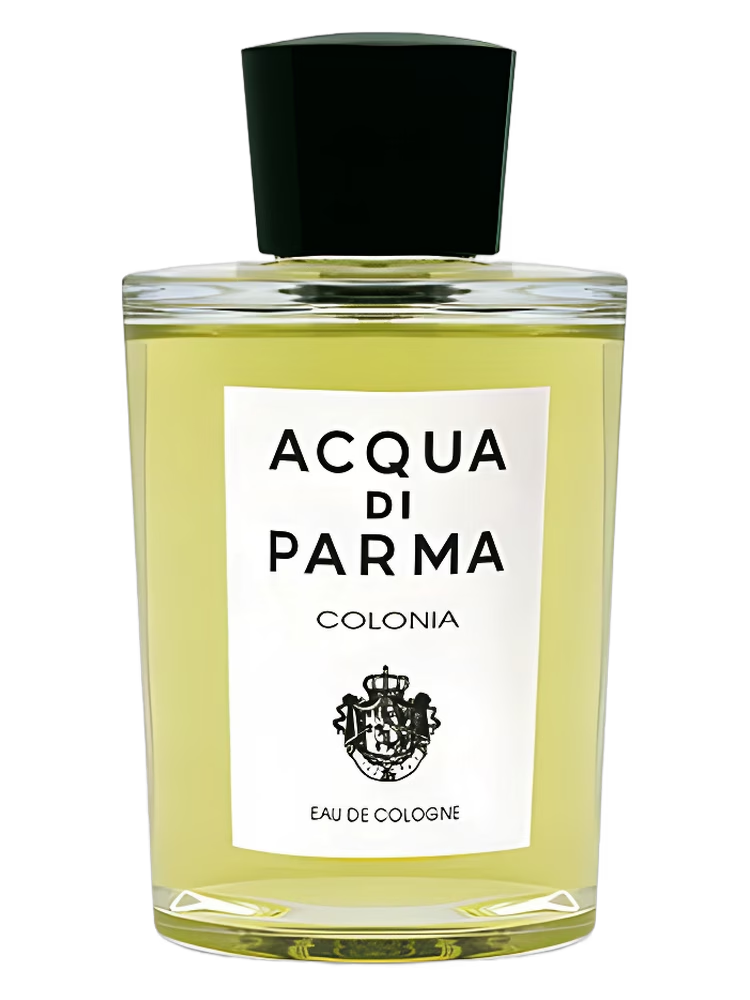
8. Acqua di Parma Colonia
- Launch year: 1916
- Creator: Baron Carlo Magnani
- Style: Classic citrus, aromatic
- Best for: Summer tailoring, daytime, formal occasions
Colonia is a reminder that summer fragrance does not have to mean sporty or aquatic.
According to LVMH, Baron Carlo Magnani created the fragrance for his own use and for a small group of friends before it became the signature fragrance of Acqua di Parma.
The fragrance represents the traditional Italian cologne style, with a bright and elegant citrus character that works particularly well with linen, light cotton and summer tailoring.
Its importance also comes from what it does not try to do. There is no need for loud projection or an obvious aquatic accord. Colonia demonstrates how citrus freshness can feel formal, mature and refined.
9. Acqua di Parma Bergamotto di Calabria
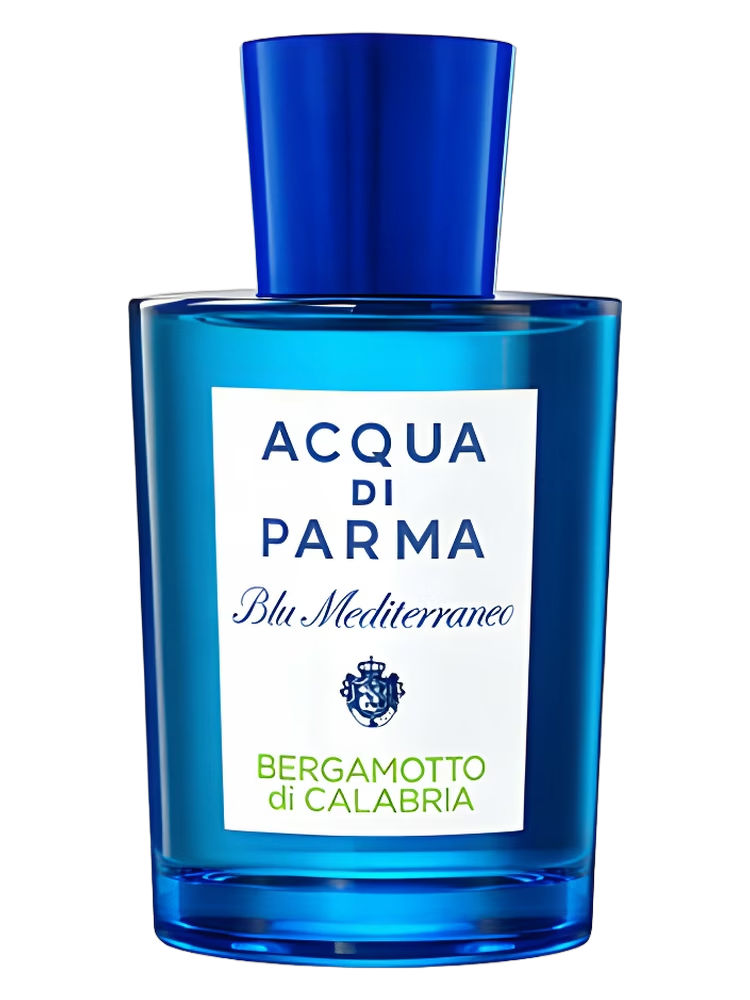
- Launch year: 2010
- Perfumer: Credit varies by source
- Style: Citrus, fresh spicy, woody
- Best for: Very hot days, daytime, holidays
Bergamotto di Calabria is built around one of the most recognisable citrus materials in perfumery. Acqua di Parma launched it in 2010 as part of the Blu Mediterraneo collection.
The published composition opens with bergamot and citron before moving into ginger and cedar. Vetiver, musk and benzoin form the base.
It is not designed as a complicated fragrance with a long list of competing ideas. The focus is on the brightness of Calabrian citrus, with ginger and woods adding enough depth to keep the fragrance from feeling flat.
For someone who prefers understated freshness rather than strong projection, it is an easy summer choice.
There is one point worth noting about its history. Public fragrance databases do not agree on the perfumer behind the original 2010 composition, so it is more accurate to leave the credit open than to present one name as certain.
10. Dior Eau Sauvage
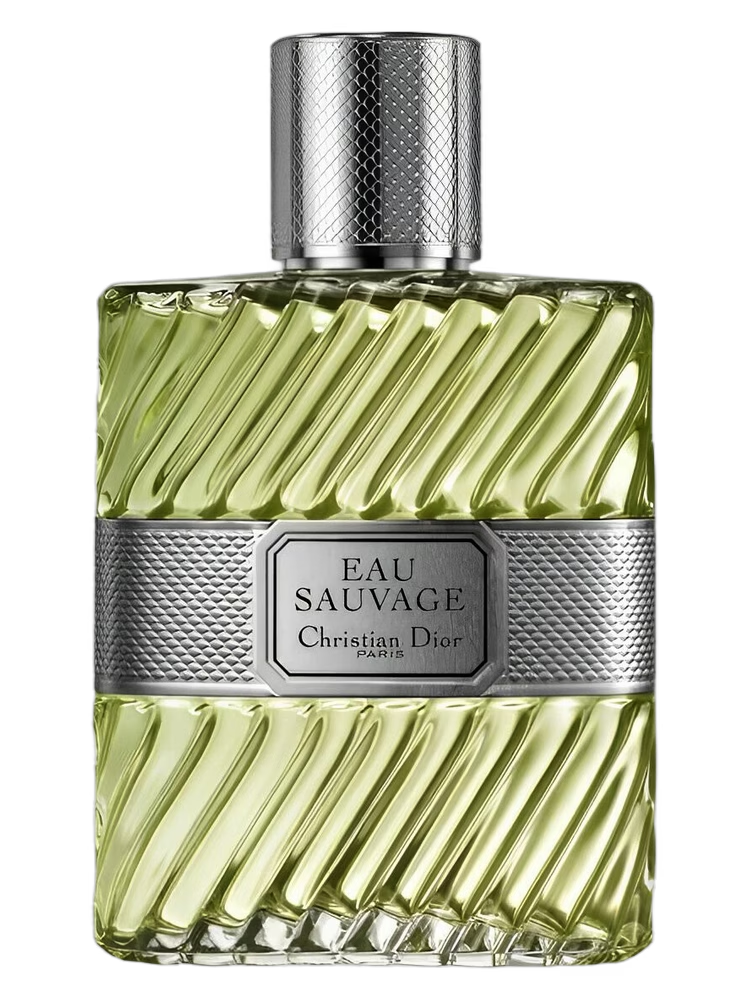
- Launch year: 1966
- Perfumer: Edmond Roudnitska
- Style: Citrus, aromatic, mossy
- Best for: Weddings, garden lunches, formal daytime
Eau Sauvage was Dior’s first men’s fragrance and remains one of the important releases in the history of modern men’s perfumery.
Edmond Roudnitska, who also created fragrances including Femme de Rochas and Diorissimo, used Hedione in unusually high quantity. The jasmine-like molecule, discovered at Firmenich in the early 1960s, helped give the fragrance an airy quality around lemon, basil and rosemary. Oakmoss and vetiver provide the foundation.
The effect was different from many of the heavier men’s fragrances available at the time. Eau Sauvage had a sense of openness and lightness, almost like fresh air entering a room.
Modern versions are lighter than vintage bottles, but the essential character remains. It has an elegant, slightly old-fashioned quality that suits formal summer occasions particularly well.
Green, Woody and Mineral Fragrances
11. Versace Man Eau Fraîch
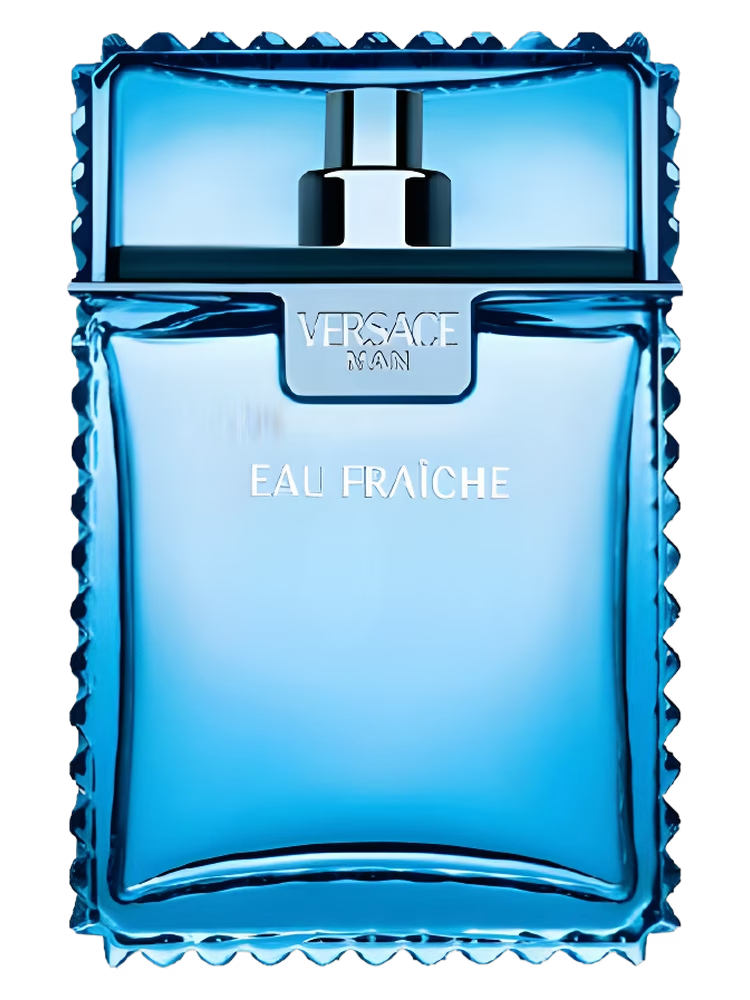
- Launch year: 2006
- Perfumer: Olivier Cresp
- Style: Citrus, aromatic, woody
- Best for: Casual daytime wear, holidays and hot-weather outings
Versace Man Eau Fraîche takes a different approach to summer freshness. It does not rely on a heavy aquatic character. Instead, it combines bright citrus with carambola, aromatic herbs and a soft woody base, giving it an easygoing character that works particularly well in warm weather.
The opening brings together white lemon, rosewood and carambola. The carambola gives the fragrance its slightly fruity character, while the citrus keeps the opening bright and refreshing. As it develops, tarragon, cedar leaves and clary sage bring a green aromatic quality to the scent. The base settles into musk, amber and sycamore wood, giving the fragrance more structure without making it feel heavy.
Versace describes Eau Fraîche as an aromatic, tonic and woody fragrance with a fresh character and an amber and musk base.
It is a straightforward choice for hot days when you want something fresh, clean and uncomplicated. It fits easily into casual summer routines, whether that means a day outdoors, a holiday or simply getting through a warm afternoon. If you prefer citrus and woody freshness over a strongly marine scent, Eau Fraîche is worth considering.
12. Hermès H24 Eau de Toilette
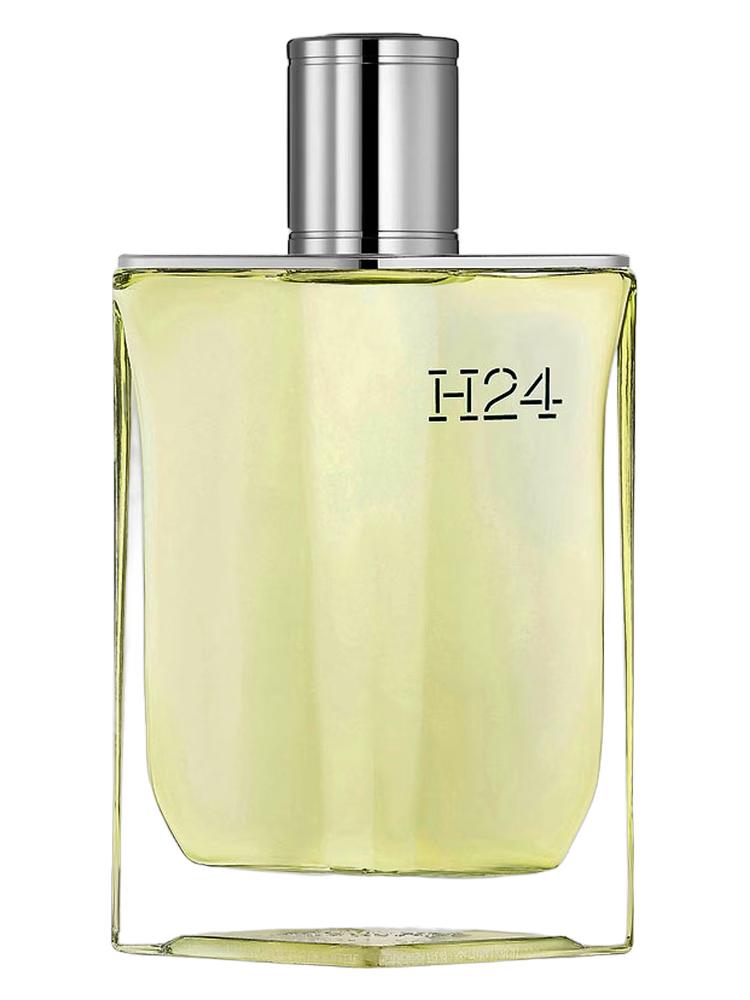
- Launch year: 2021
- Perfumer: Christine Nagel
- Style: Green, aromatic, woody, mineral
- Best for: Office, city life, daytime
H24 was Hermès’ first major men’s fragrance launch in around fifteen years. It was developed alongside the house’s men’s ready-to-wear universe and takes a noticeably different approach from the standard blue aquatic fragrance.
Christine Nagel built the composition around clary sage, narcissus, rosewood and sclarene.
The result is clean and green, but the freshness does not come from lemon or seawater. There is also a metallic and botanical quality that gives H24 its own identity.
That makes it particularly interesting for men who have grown tired of conventional citrus-aquatic fragrances. It works across a normal day, from work to a casual evening, without trying to dominate the room.
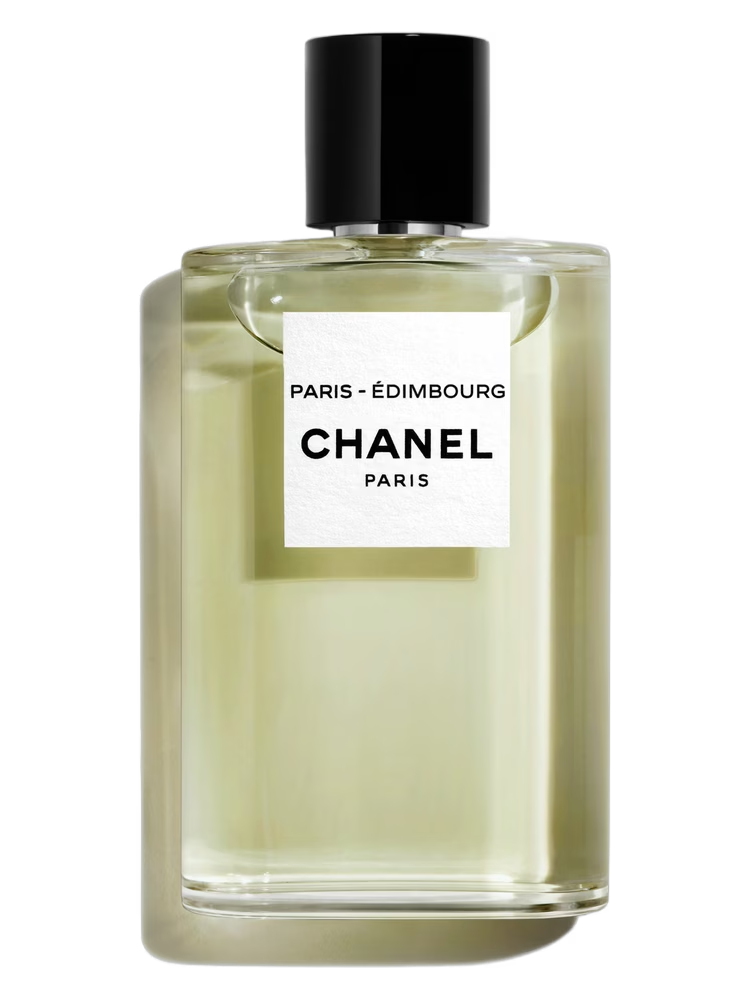
13. Chanel Paris-Édimbourg
- Launch year: 2021
- Perfumer: Olivier Polge
- Style: Green, woody, aromatic
- Best for: Daytime, travel, smart casual wear
Paris-Édimbourg offers one of the more unusual summer settings in this list. Its inspiration is not a Mediterranean beach but the Scottish Highlands.
Chanel connects the fragrance to Gabrielle Chanel’s relationship with the Duke of Westminster and her visits to Scotland beginning in 1924. Olivier Polge built the fragrance around juniper berry, cypress and vetiver.
The result is green, woody and aromatic. Juniper and cypress provide freshness without the salty marine effect found in aquatic fragrances, while vetiver adds an earthy quality as the scent develops.
It is a useful choice for someone who wants summer freshness but does not enjoy smelling like the ocean. The fragrance works particularly well with casual tailoring and gives a cooler, greener interpretation of warm weather.
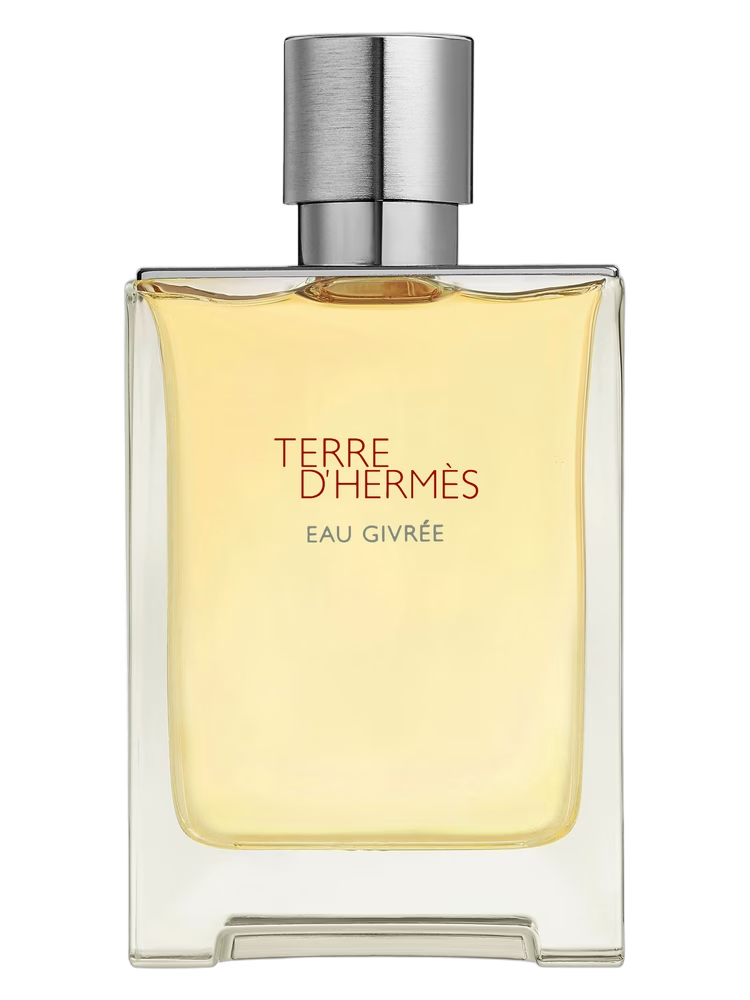
14. Terre d’Hermès Eau Givrée
- Launch year: 2022
- Perfumer: Christine Nagel
- Style: Citrus, mineral, woody, spicy
- Best for: Hot daytime wear, office, smart casual occasions
Eau Givrée takes the Terre d’Hermès idea and gives it a colder, sharper impression.
Hermès describes the concept through the image of frost covering the earth. Christine Nagel built the fragrance around citron, juniper berry and Timut pepper, while retaining the mineral and woody character associated with the Terre d’Hermès family.
The citron gives the opening its energy. Juniper adds a crisp aromatic quality, while Timut pepper brings a sparkling spice before the mineral woods become more noticeable.
The result is both sharp and earthy. It provides freshness without losing the mature character that defines the Terre d’Hermès style.
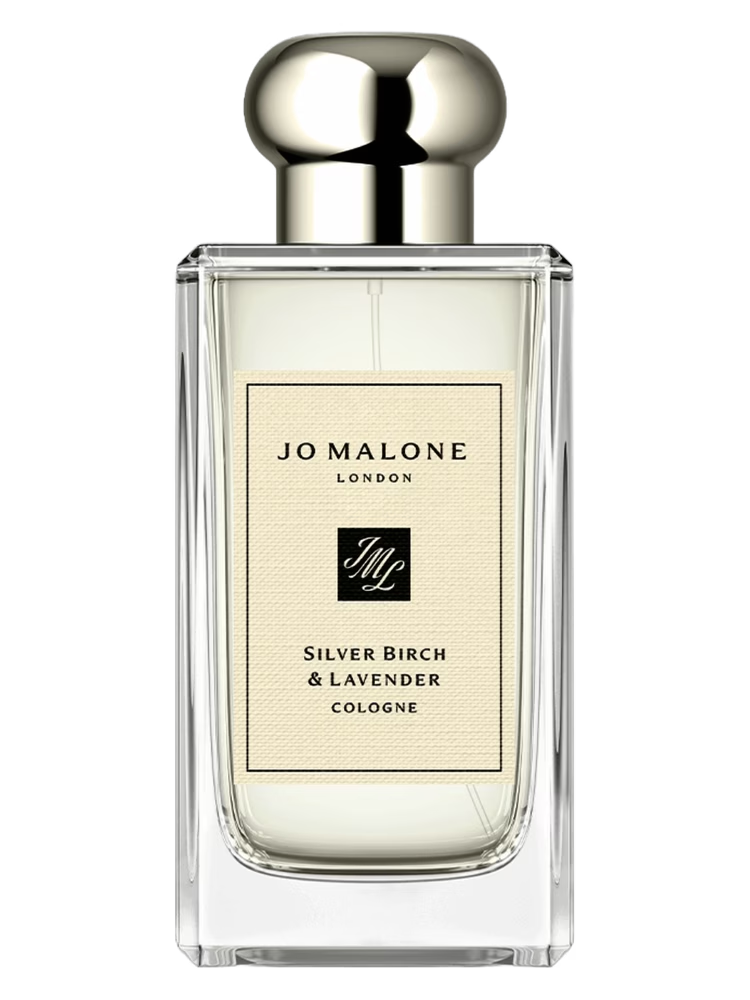
15. Jo Malone London Silver Birch & Lavender
- Launch year: 2020
- Perfumer: Yann Vasnier
- Style: Fresh, woody, aromatic
- Best for: Summer mornings, smart casual wear, relaxed evenings
Jo Malone London presents Silver Birch & Lavender as a fragrance inspired by morning light passing through silver birch trees. Grapefruit, English lavender, silver birch and roasted oak form the main structure.
This is not a tropical interpretation of summer. It feels more like a cool morning outdoors.
Grapefruit gives the fragrance a sharp citrus opening. Lavender brings an aromatic quality, birch supplies the woody structure and roasted oak adds a darker texture underneath the freshness.
It fits Jo Malone London’s preference for relatively clear, recognisable materials and can also be layered with other fragrances from the house.
For men who prefer green and woody scents to aquatic fragrances, it offers a quieter alternative.
Versatile, Evening and Stronger Fragrances
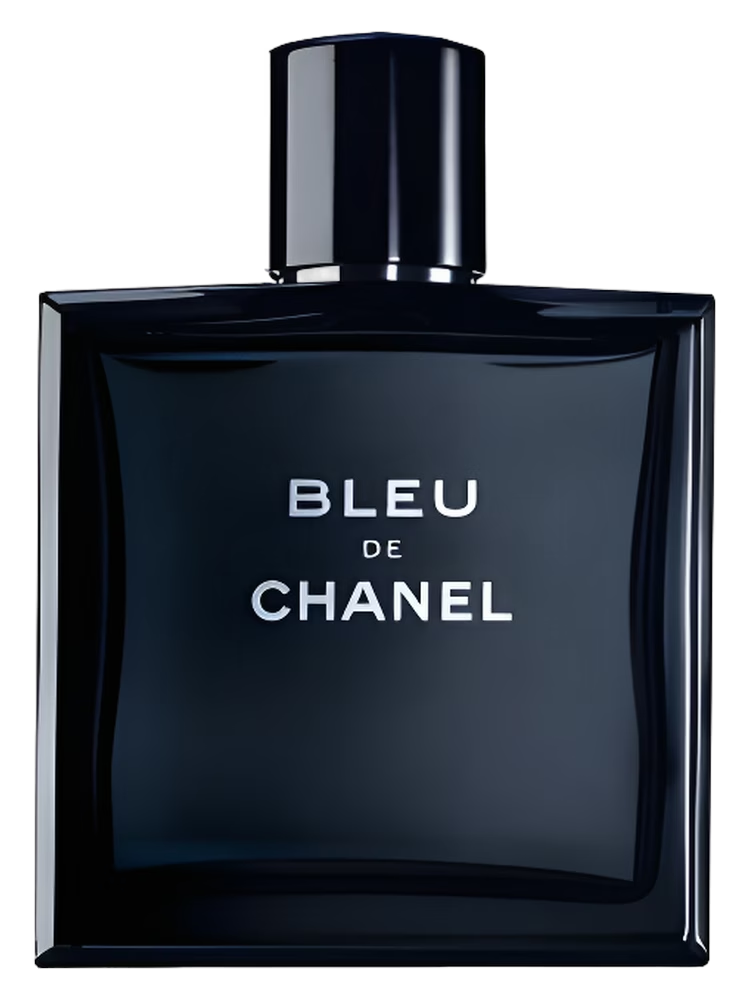
16. Bleu de Chanel Eau de Toilette
- Launch year: 2010
- Perfumer: Jacques Polge
- Style: Citrus, aromatic, woody
- Best for: Office, dates, travel, smart casual wear
Chanel launched Bleu de Chanel in 2010, with Jacques Polge credited as its creator. The fragrance became the house’s major new men’s fragrance project after several years without a new men’s masterbrand.
The Eau de Toilette combines citrus freshness with aromatic and woody elements. It is not built purely around an aquatic effect. Instead, the woods and aromatics give the fragrance more structure and polish.
That versatility is useful during summer. It can work at the office, on a trip, during lunch, on a casual date or at dinner without being tied to one particular setting.
The citrus keeps it comfortable in warm weather, while the woods prevent it from feeling like a basic splash of cologne.
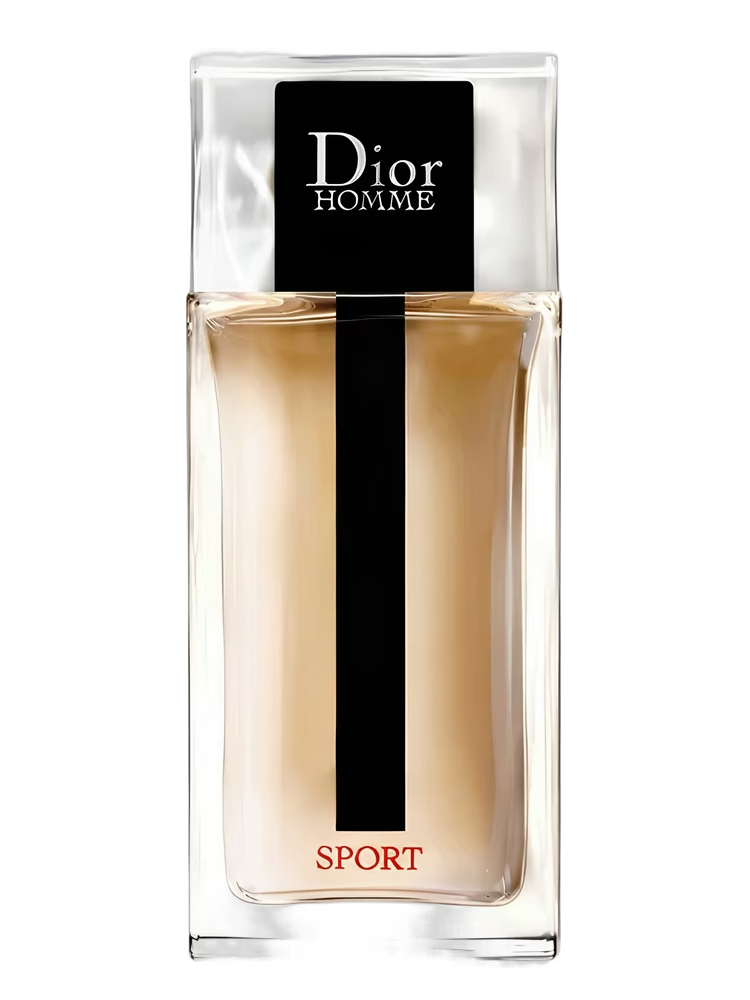
17. Dior Homme Sport
- Original launch: 2008
- Current version: 2021
- Perfumer: François Demachy
- Style: Citrus, spicy, woody
- Best for: Daytime, summer evenings, dates
Dior Homme Sport has gone through several versions, which makes its launch history easy to confuse. The name first appeared in 2008, followed by a reformulation in 2012, another version in 2017 and the current major interpretation released in 2021 by François Demachy.
The 2021 version moves beyond simple freshness. Dior built it around a contrast between energetic citrus and warmer, more sensual materials.
Lemon gives the opening its brightness, while pink pepper and elemi introduce spice. The fragrance then develops toward frankincense, woods and amber.
This makes it particularly useful for summer days that continue into the evening. It starts with the freshness expected from a warm-weather fragrance but develops more body later.
For someone who finds traditional aquatic fragrances predictable, Dior Homme Sport offers a different route into summer freshness.
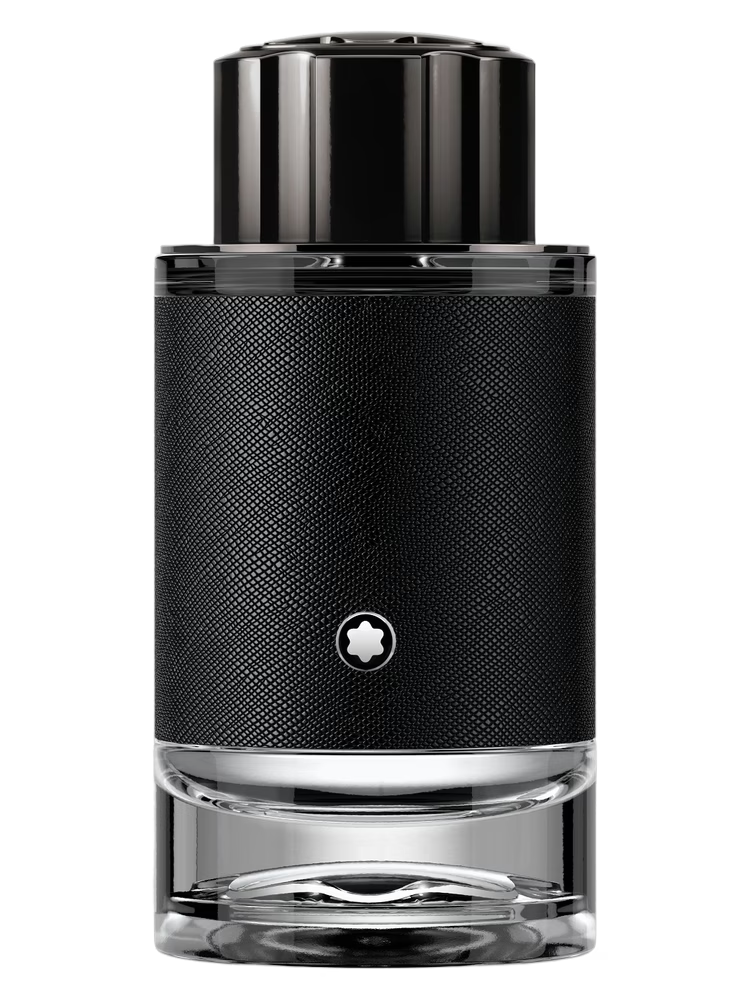
18. Montblanc Explorer
- Launch year: 2019
- Perfumers: Jordi Fernández, Antoine Maisondieu and Olivier Pescheux
- Style: Woody, aromatic, leathery, fresh
- Best for: Travel, summer evenings, casual wear
Montblanc Explorer is built around the idea of modern exploration rather than the traditional beach or citrus-colonge concept.
The composition combines Italian bergamot, Haitian vetiver and Indonesian patchouli with pink pepper, clary sage, leather, ambroxan and Akigalawood.
It has considerably more depth than a simple citrus fragrance, which makes it less suitable for the hottest part of the afternoon. As temperatures fall, however, its woody and leathery character becomes easier to appreciate.
It works well for travel, evening dinners, outdoor events and casual summer nights. There is no marine accord here. Instead, the fragrance creates its sense of freshness through bergamot, vetiver, patchouli and woods.
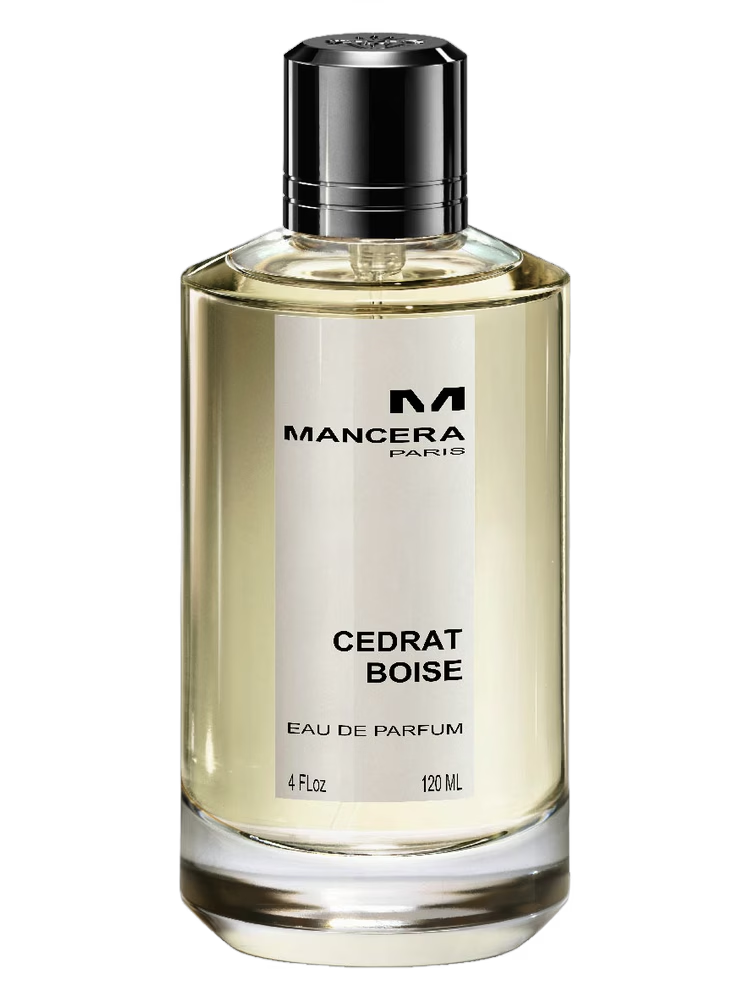
19. Mancera Cedrat Boise
- Launch year: 2011
- Perfumer: Pierre Montale
- Style: Citrus, fruity, woody, leather
- Best for: Summer evenings, travel, stronger performance
Cedrat Boise occupies the heavier end of this summer list. It begins with Sicilian lemon, bergamot, blackcurrant and spice before moving into fruity notes, patchouli and water jasmine.
The base is richer, with cedar, leather, sandalwood, vanilla, white musk and moss.
That structure gives Cedrat Boise much more substance than a conventional citrus cologne. The citrus connects it to warm weather, while the woods, leather, vanilla and musk give it depth and a longer-lasting character.
It makes more sense in the evening than at the hottest point of the afternoon. If you want a summer fragrance with more presence, it provides that, but the strength also means that restraint matters. Fewer sprays are usually enough in high heat.
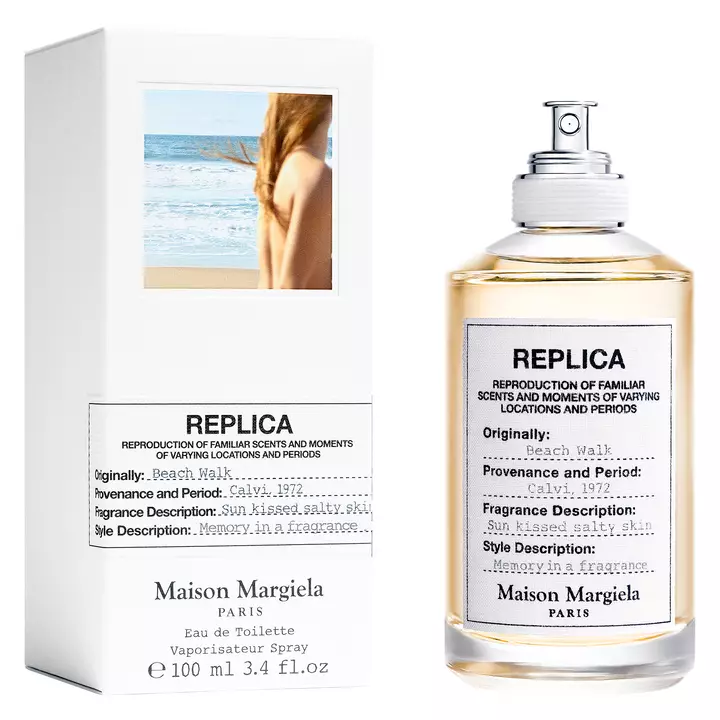
20. Maison Margiela Replica Beach Walk
- Launch year: 2012
- Perfumer: Jacques Cavallier and Marie Salamagne
- Style: Fresh, floral, solar, woody
- Best for: Beach days, holidays, relaxed summer outings
Maison Margiela Replica Beach Walk is built around the feeling of warm skin, sea air and a sunny day at the beach. Rather than smelling like a sharp aquatic fragrance, it combines fresh citrus with creamy coconut, soft florals and musks to create a warmer and more relaxed interpretation of summer.
The opening brings together bergamot, pink pepper and lemon. Bergamot provides a bright citrus freshness with a slightly floral character, while lemon adds another layer of freshness and pink pepper gives the opening a subtle spicy lift. The combination creates the impression of a light summer breeze before the warmer notes begin to appear.
At the heart of the fragrance, ylang ylang adds a rich, radiant floral character, while heliotrope gives the composition a softer, slightly powdery quality. Coconut milk is one of the defining ingredients, bringing a creamy and smooth sweetness with a sunny character that can recall the smell of monoi and sunscreen. The fragrance also uses TransluZone as part of its airy, diffusive character.
The base is built around cedarwood, white musks and benzoin resinoid. Cedarwood gives the fragrance a gentle woody foundation, while the white musks create a soft, powdery skin-like effect. Benzoin adds warmth and sweetness, helping the coconut and musk notes settle into the skin. Together, these notes create the impression of sun-warmed skin rather than a cold, purely aquatic fragrance.
Beach Walk is therefore better suited to relaxed summer settings than formal occasions. It works naturally for beach trips, holidays, poolside afternoons and casual days when you want something that feels warm, clean and distinctly summery. Because of its creamy coconut and musk character, it can also work well on summer evenings when you want a softer scent rather than a sharp citrus cologne.
Also worth a look: Calvin Klein CK One, Hermès Eau d’Orange Verte, Prada Luna Rossa Ocean, Yves Saint Laurent Y Eau de Toilette and Chanel Allure Homme Sport all make sense in warm weather, even though they did not make the final 20.
How to Choose the Right Summer Fragrance
There is no single type of perfume that qualifies as a summer fragrance. Your choice should depend on the kind of weather you experience, where you spend your time and how you want the fragrance to feel.
If you spend most of your time in extreme heat, bright citrus fragrances can be easier to wear than dense woody compositions. An office calls for something fresh but controlled. Frequent travellers may want versatility, while summer evenings give you more room for woods, musk, amber and spice.
For extreme heat, lighter fragrances are usually the easier starting point. Dior Homme Cologne is a clear example of a simple hot-weather composition. Bergamotto di Calabria also focuses strongly on citrus, while Light Blue Pour Homme combines citrus with rosemary and woods. Acqua di Giò is another option if you prefer marine freshness.
Light does not mean weak. Some fragrances are deliberately uncomplicated because that is what the weather and setting require.
For the office, projection matters less than versatility and comfort. Bleu de Chanel EDT combines citrus, aromatics and woods in a way that works across different situations. H24 offers a greener and more contemporary alternative to the typical aquatic fragrance, while Terre d’Hermès Eau Givrée provides a drier, more mature character.
For dates, freshness can be paired with more personality. Dior Homme Sport brings citrus, spice, woods and amber, while Replica Beach Walk offers a warmer, softer skin-scent effect. In a close setting such as a restaurant, the fragrance should be noticeable when someone is near you rather than from several metres away.
If you hate aquatic scents, summer still gives you plenty of choices. H24 is green and mineral. Paris-Édimbourg takes its inspiration from the Scottish Highlands. Terre d’Hermès Eau Givrée combines citrus, juniper and mineral woods, while Silver Birch & Lavender uses grapefruit, lavender and birch.
Summer can smell like forests, herbs, citrus groves and cool air. It does not have to smell like seawater.
For long-lasting performance in high heat, be more careful about chasing maximum strength. A fragrance that projects heavily for ten hours is not necessarily comfortable to wear in hot weather.
Look instead for a balance between fresh opening notes and a more substantial base. Mancera Cedrat Boise combines lemon, bergamot and blackcurrant with cedar, leather, sandalwood, vanilla and musk. Montblanc Explorer places bergamot and clary sage alongside vetiver, leather, ambroxan, patchouli and Akigalawood. Aqva Pour Homme is another option for anyone who wants a marine fragrance with more substance.
In serious heat, apply stronger fragrances carefully. For lighter fragrances, carrying a small atomizer can make reapplication easier than overspraying at the beginning of the day.
Summer Fragrance Does Not Have to Mean “Blue”
The popularity of blue men’s fragrances has created the impression that a summer perfume should smell aquatic, clean and slightly sweet. That is only one interpretation of warm-weather fragrance.
Colonia represents the traditional Italian citrus cologne. H24 approaches summer through green and mineral notes. Paris-Édimbourg draws from the Scottish Highlands. Terre d’Hermès Eau Givrée combines citrus with mineral woods, while Silver Birch & Lavender focuses on grapefruit, lavender and birch.
These fragrances smell very different from one another, yet each can work during summer.
That is why fragrance families are often more useful than bottle colours. Instead of asking which blue fragrance to wear, think about the character you actually want. Do you want citrus, water, green leaves, herbs, woods, clean skin, a Mediterranean coast or a cool forest?
Once you know that, choosing becomes much easier.
Eau de Toilette or Eau de Parfum for Summer?
You will often hear that eau de toilette is automatically better for summer. That is too simple.
Concentration matters, but it does not tell you exactly how a fragrance will behave. A dense eau de toilette can feel heavier than a fresh eau de parfum because the ingredients, balance and overall structure matter just as much as the concentration printed on the bottle.
The best way is to pay attention to the fragrance itself. Ask yourself questions such as:
Does it feel airy when you wear it? Does the opening become too sweet in heat? Is the dry-down comfortable? Does it project more strongly than you want? Can you wear it comfortably indoors as well as outdoors?
Those questions will tell you more about whether a fragrance suits summer than whether the bottle says Eau de Toilette or Eau de Parfum.
Final Thoughts
The best summer fragrances for men do not all smell alike, and they do not need to.
Some use marine notes and citrus to create the feeling of water and open air. Others rely on herbs, green notes, woods or minerals. Some take a warmer approach through fruit, coconut and musk, while stronger compositions use leather, vanilla and woods to give summer evenings more depth.
Their histories are just as varied. Eau Sauvage, launched in 1966, showed that a men’s fragrance could have an airy, open character. Cool Water and Acqua di Giò helped establish the importance of aquatic freshness, while L’Eau d’Issey Pour Homme approached the idea through the purity and power of water.
Acqua di Parma Colonia reaches much further back, to 1916, when Baron Carlo Magnani created it for personal use before it became the signature fragrance of the house. More recent releases have taken very different approaches, from H24’s connection with contemporary clothing to Paris-Édimbourg’s interpretation of the Scottish landscape.
A perfume is more than a list of notes. The materials matter, but so does the idea behind the composition and the way those materials behave on skin.
If you want a Mediterranean style, Acqua di Giò and Light Blue Pour Homme offer two different interpretations. For a polished everyday fragrance, Bleu de Chanel EDT provides a versatile citrus, aromatic and woody profile. H24 and Paris-Édimbourg take a greener approach, while Dior Homme Cologne keeps things deliberately simple for extreme heat.
For summer evenings, Cedrat Boise and Montblanc Explorer bring more depth without abandoning freshness.

Join the Conversation